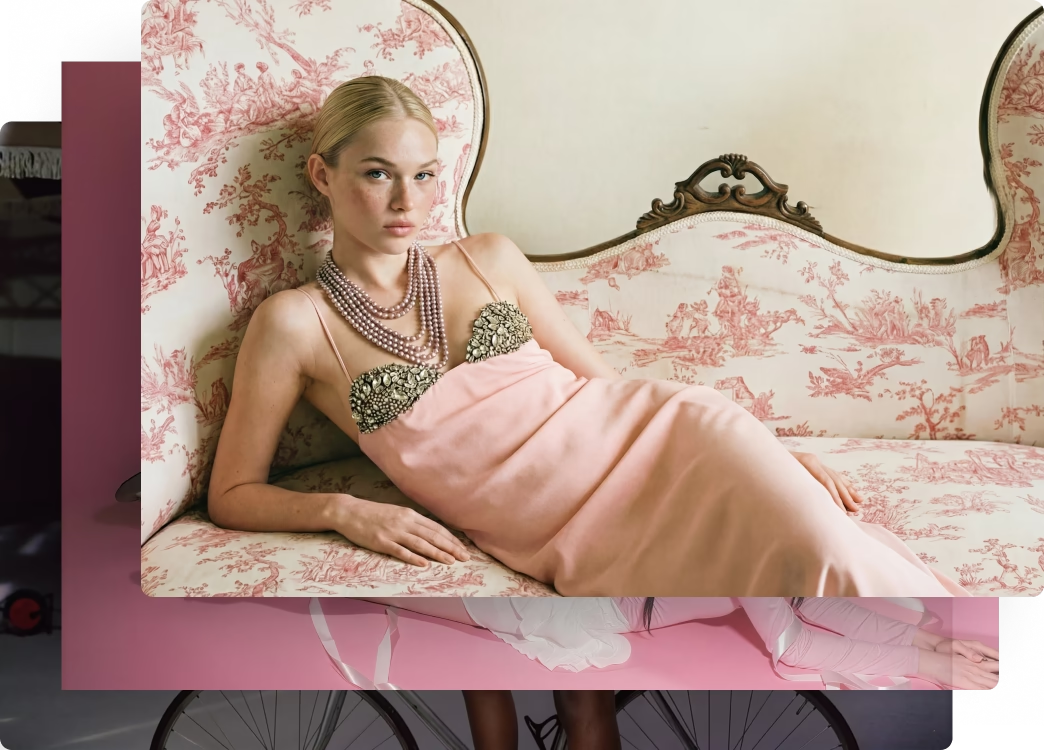
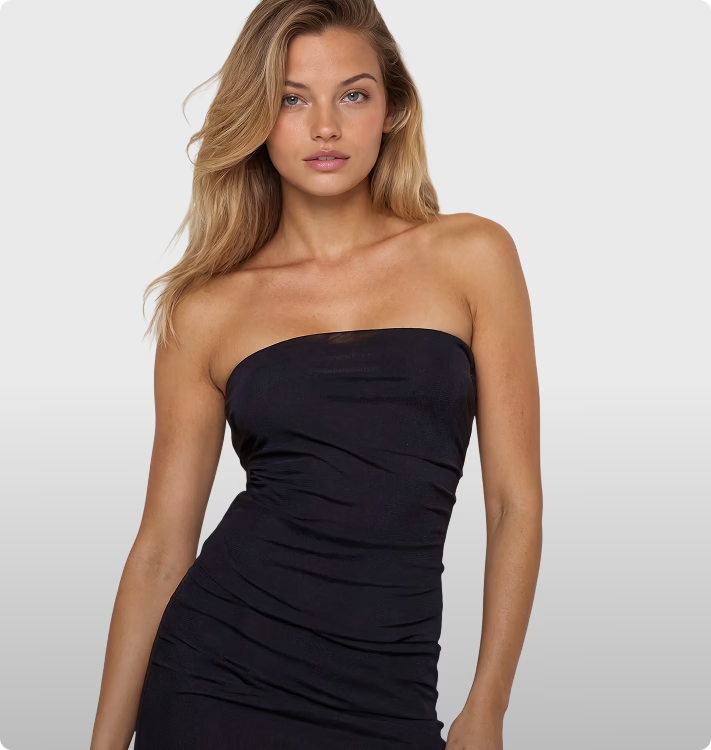
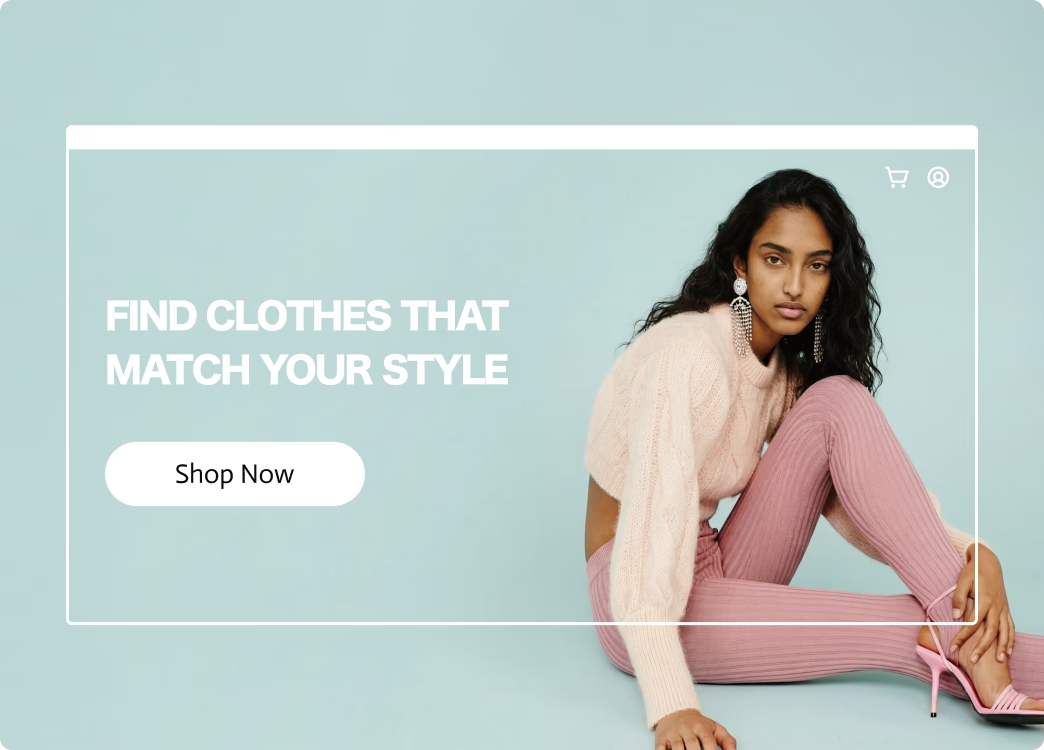
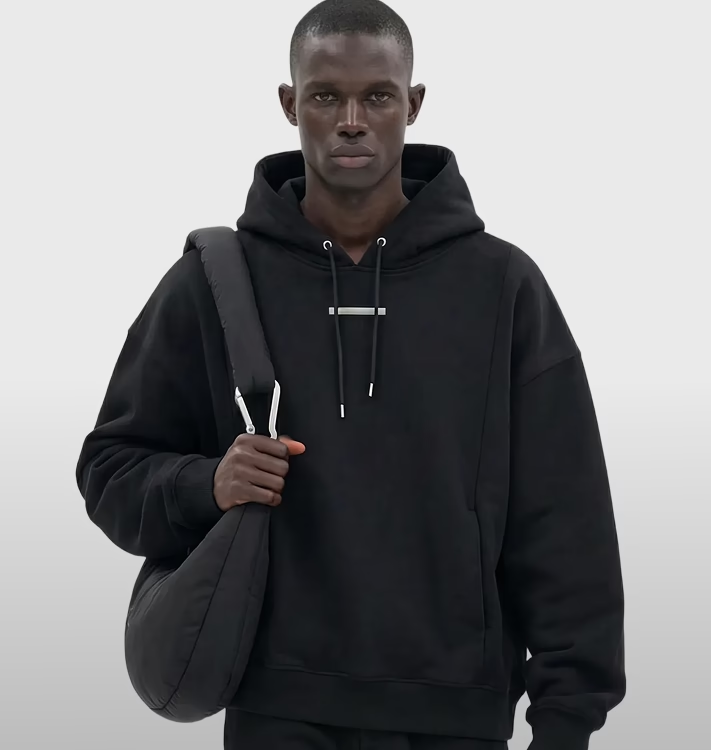
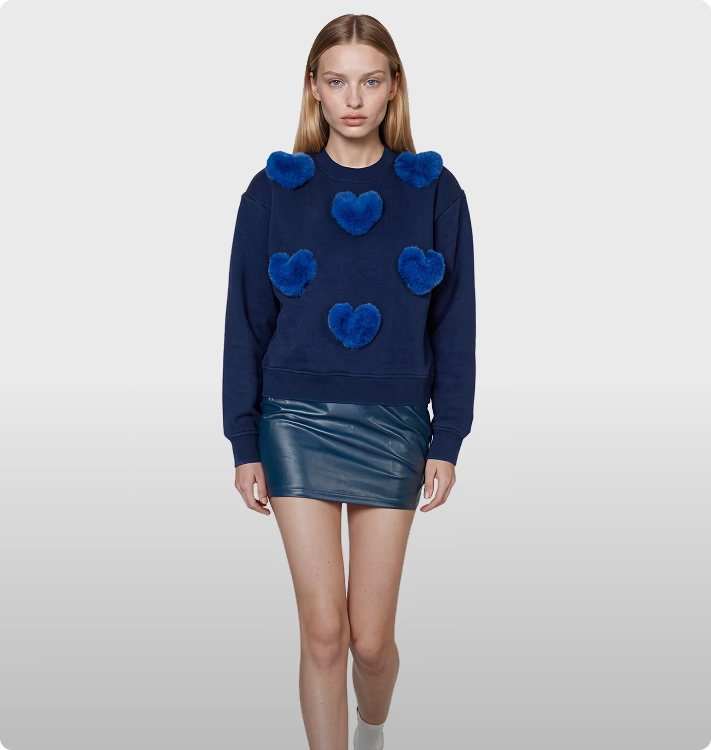
Botika homepage — AI generated models trusted by world-class fashion brands
Brand Intelligence Report

Botika

A deep-dive analysis of Botika's brand position, product strength, market context, and strategic opportunities as of 2025.

TL;DR

The product is ahead of the brand. Enterprise-grade output, startup-level visibility.
$8M Seed, Jan 2025
9x Revenue Growth YoY
−90% Production Cost
+128% CTR Lift
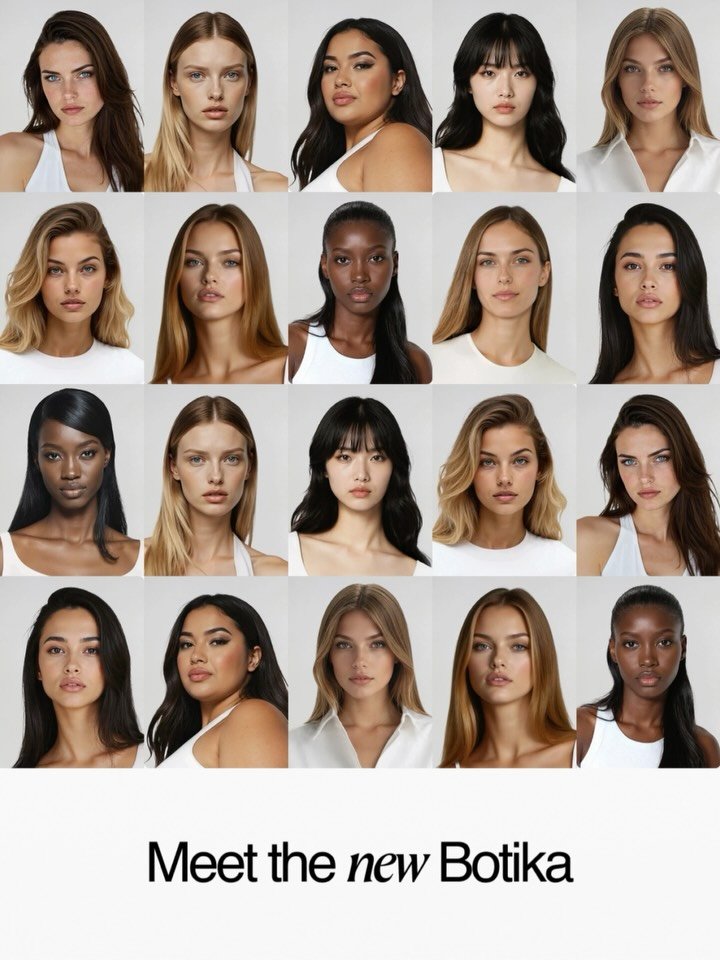
Botika — Meet the new Botika, 20 diverse AI-generated model faces
01

At a Glance

$8M Seed Round

January 2025 — Stardom, Secret Chord Ventures, Seedcamp

9x Revenue Growth YoY

Year prior to funding announcement

11x Customer Growth YoY

Strong expansion and acquisition signals

−90% Production Cost

vs. traditional model photoshoot

40x Faster to Market

Minutes, not weeks, from flat-lay to on-model imagery

+128% CTR Lift

Click-through rate on AI-generated product images

Founded

2022 — Tel Aviv, Israel

Founders

Eran Dagan & Yarin Didi Meir

Distribution

Shopify App Store + Direct Enterprise

Key Clients

Forever 21, Perry Ellis, Jordache, Nil+Mon

02

The AI Fashion Studio

Botika's core product is simple to describe and difficult to execute: upload a product image on a flat surface or mannequin, and receive professional on-model photography in return. The AI generates the model — ethnicity, body type, hair, skin tone — from a growing library of diverse appearances, with the option to build a consistent brand model identity over time.

The position this creates is precise. Botika is not a background-removal tool, not a virtual try-on app for end consumers, and not a text-to-image generator. It is infrastructure for fashion content at scale — a permanent replacement for a specific, expensive, slow workflow that every fashion e-commerce brand has to execute: producing catalog and marketing imagery with models wearing their products.

What differentiates Botika in the market is not just the output quality (though that matters) but the enterprise client roster that validates it. When Forever 21 and Perry Ellis are customers, the "enterprise-grade" positioning is not an aspiration — it is already a fact. The challenge for Botika is to build the brand around that fact explicitly and claim category leadership before a competitor with more brand investment does it first.

"9x revenue growth and 11x customer growth in the year before the seed round. The product is working. The question now is whether the brand can keep up with it."
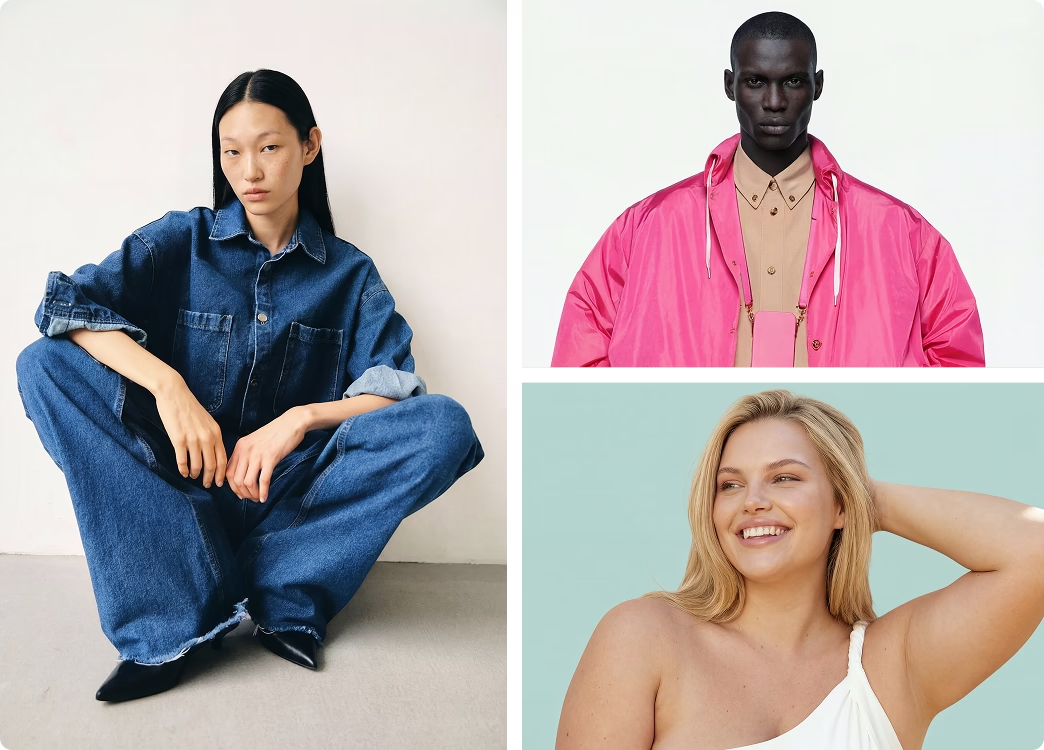
Botika AI-generated fashion models showing diversity across ethnicities and styles
Core Strategic Insight

The product is ahead of the brand.

Enterprise clients are already using Botika at scale. The product metrics are compelling and specific. The brand — its voice, visual identity, and public positioning — has not yet caught up to what the product already delivers. That gap is both the most urgent challenge and the biggest opportunity on the table.

03

Visual System Analysis

Logo

Botika B logomark on dark background

The Botika "B" mark is geometrically constructed with an eye motif embedded in the negative space between the two bowls of the letterform. The dual reading — letter and eye — is intentional: visual AI, machine perception, the fashion world's fixation with image and gaze. The mark is clean and modern, but works better as a symbol than as a primary brand expression. At smaller sizes, the eye motif collapses. The wordmark "BOTIKA" carries the identity at most touchpoints.

Color Palette

Signal Green #00A756
Near Black #0C0C0C
Dark Brown #272523
Light Grey #e6e6e6

The Signal Green (#00A756) is Botika's most distinctive brand asset — a saturated, high-energy green that reads as technological, progressive, and growth-oriented. It appears consistently on the logo and in CTA elements. The dark palette (Near Black + Dark Brown) signals premium. The risk: the green is a strong color but the brand world built around it is not yet developed. A color is only a system when it's applied with intention across all touchpoints.

Typography

Fashion, Automated.
The primary typeface across Botika's website and marketing is Inter — a highly legible, tech-neutral sans-serif. The choice signals clarity and professionalism over personality. It works well at small sizes and in UI contexts.
font-family: 'Inter', -apple-system, sans-serif — weight 400/500

A display typeface — something with more fashion-adjacent warmth or editorial quality — would create stronger brand recall and differentiation from competitors who also use neutral sans-serifs. This is a low-cost, high-impact identity upgrade.

04

The Arc

2022

Founded — Tel Aviv, Israel

Eran Dagan and Yarin Didi Meir start Botika with a clear thesis: AI can eliminate the cost and logistics of fashion model photography for e-commerce brands. Early product development stage. The founders bring technical depth and fashion industry context in combination — an unusual pairing that shapes the product's quality focus from the start.

2023

Shopify App Store Launch

Product enters the market via Shopify App Store, making the workflow accessible to DTC fashion brands without developer setup. Early traction validates the core concept. The distribution strategy is smart — meeting e-commerce operators inside the platform they already use reduces the friction of adoption. Early reviews are mixed, flagging onboarding complexity as the primary friction point.

2024

Enterprise Breakthrough & Product Expansion

Forever 21, Perry Ellis, Jordache, and Heliot Emil become customers. 9x revenue growth, 11x customer growth YoY — the sharpest inflection point in Botika's history. The editorial product launches with Nil+Mon, demonstrating the platform's reach beyond basic catalog photography. Jordache EVP publicly quotes Botika, providing the first major enterprise testimonial. The Creator Partner Program introduces a new content-driven acquisition motion.

2025

$8M Seed Round — Series A Runway

Stardom, Secret Chord Ventures, and Seedcamp lead the round in January. The funding validates the enterprise trajectory and provides runway to build out the team, product, and brand. Botika enters the year with institutional capital, a proven client roster, and the need to close the gap between product reputation and brand recognition. The brand opportunity now matches the product opportunity.

05

On-Model Imagery Across Clients

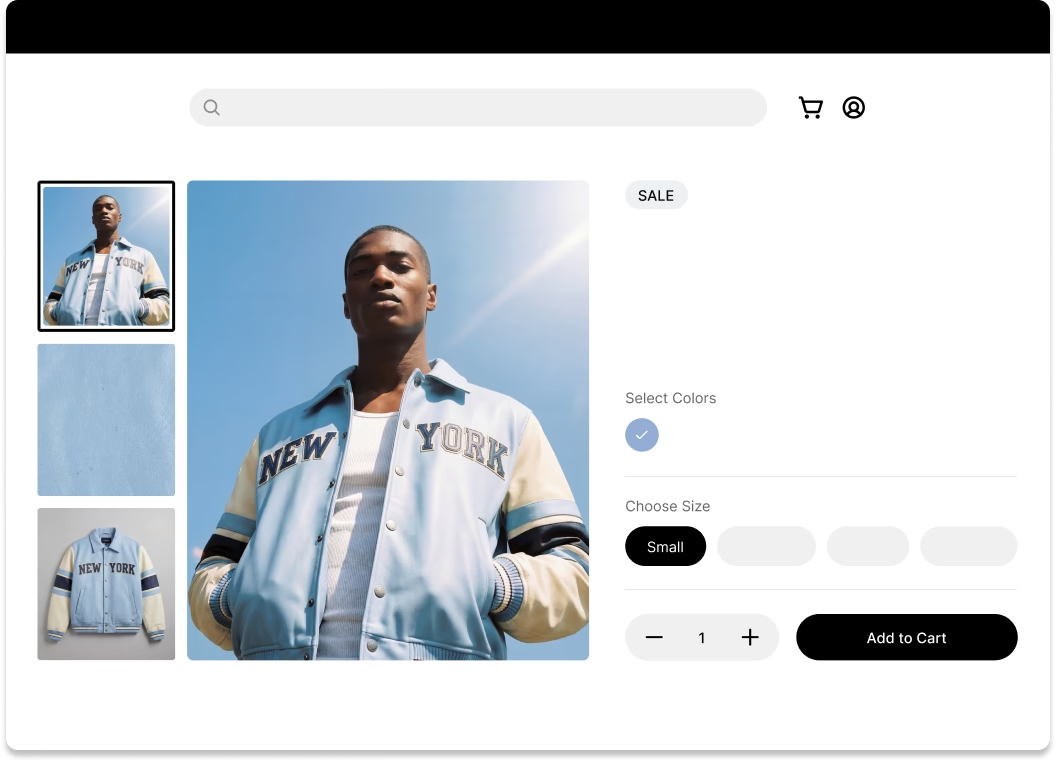
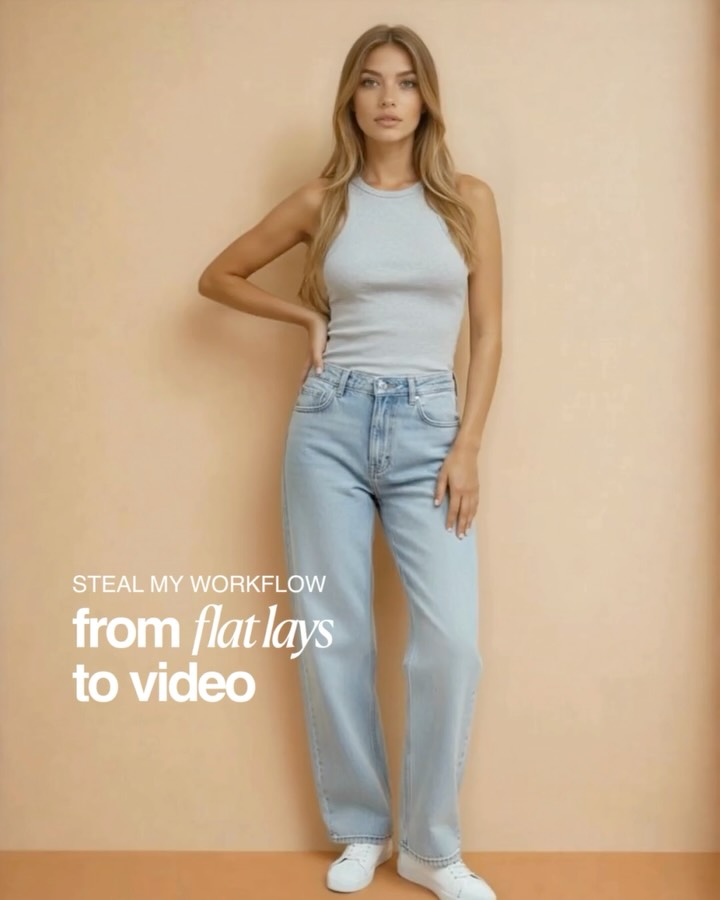
Every image below was generated from a product flat-lay or mannequin image using Botika's platform. No models were booked, no studios rented, no shoots scheduled. These represent the output quality across client brands of different positioning — from DTC editorial to legacy American fashion.
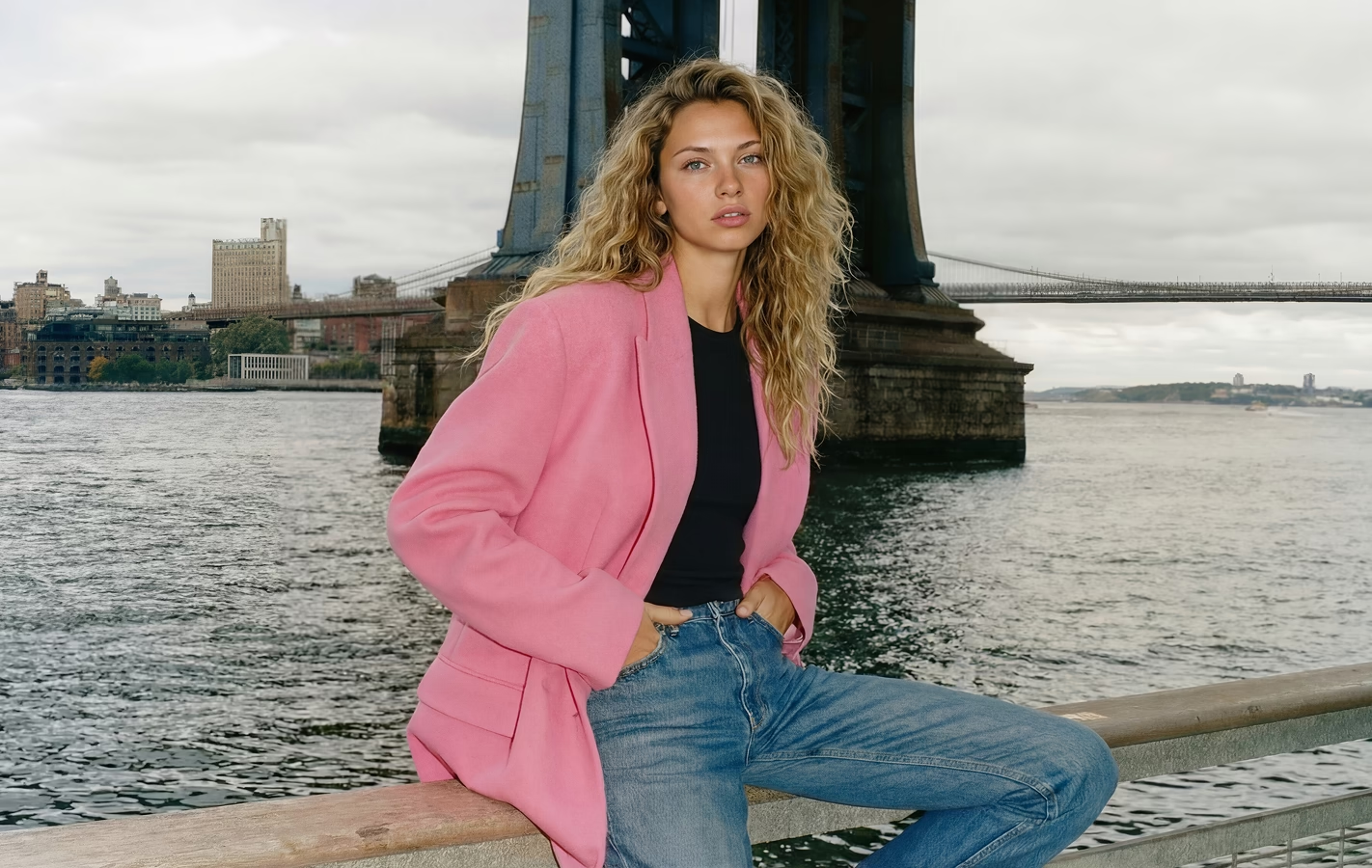
Botika Creator Program — lifestyle campaign imagery
Botika platform — cost efficiency product demonstration
Botika editorial photography — JUAN & ME campaign imagery
Forever 21 × Botika — AI-generated on-model photography
Botika platform — get to market faster feature
Heliot Emil × Botika — AI-generated on-model photography
Jordache × Botika — AI-generated denim campaign imagery
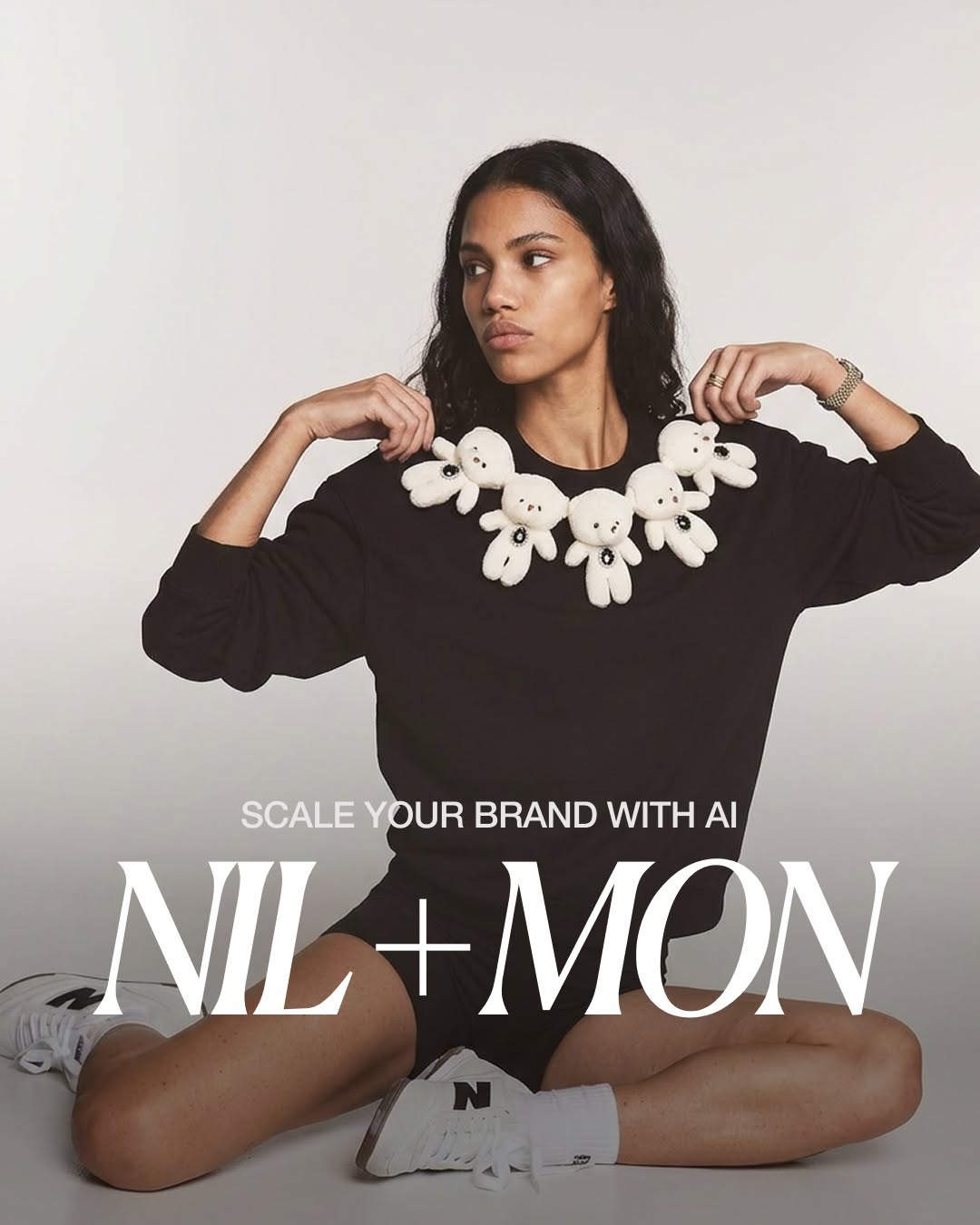
Nil+Mon × Botika — AI-generated editorial imagery
06

Website & UX Audit

The marketing website leads with enterprise intent — "AI for fashion teams" establishes the audience immediately. The hero section is well-structured: problem statement, social proof logos (Perry Ellis, Heliot Emil), and a product demonstration before the first scroll. Feature cards are outcome-labeled ("Get to market faster," "Cut production costs") rather than feature-labeled, which signals a product team that understands their buyers' actual language.

The Nil+Mon case study is the most compelling section — the blue coat image is visually distinctive and the "4x conversions" result is specific and credible. The Jordache testimonial from Shaul Cohen (EVP) adds legitimate enterprise weight. These are strong proof points that earn trust.

Key friction points: The statistics section occasionally renders animated counters as "0%" in static views — a technical oversight that undermines the very metrics the brand leans on for credibility. The "Botika's Creative Partner Program" section is underexplained, creating an expectation gap for potential partners.

The Shopify App Store experience (2.5★, 29% one-star) diverges sharply from the marketing website's polished positioning. Users who find friction during onboarding are unlikely to revisit — this gap between marketing promise and product reality is the most urgent UX and brand issue to address.
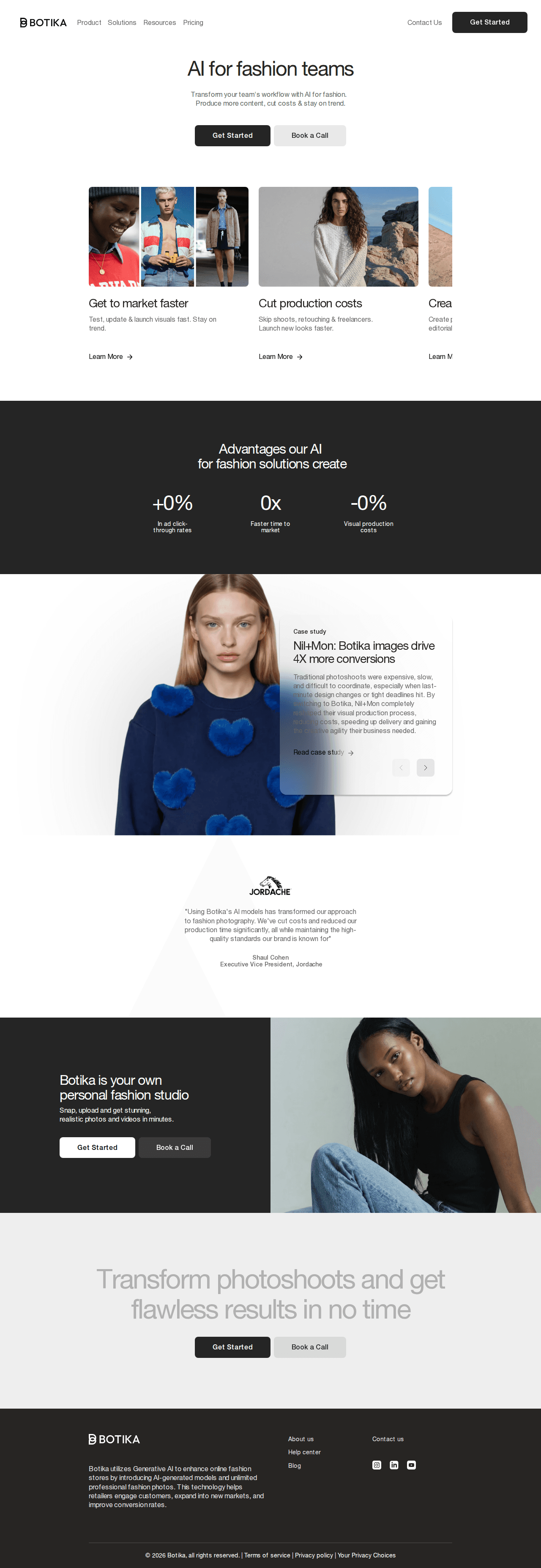
Botika solutions page — AI for fashion teams enterprise positioning
UX Signal Breakdown
✓ Outcome-first feature labeling
Headers like "Get to market faster" vs "Feature X" show buyer empathy
✓ Specific case study results
4x conversions (Nil+Mon) and +128% CTR are testable, specific claims
⚠ Animated stats render as 0%
CSS animation-dependent counters break in static views and link previews
⚠ App Store gap (2.5★ avg)
Onboarding friction flagged in 29% of reviews — contradicts website positioning
07

Brand Scorecard

Criterion Score Rationale
Cultural Relevance AI + fashion + diversity is one of the most culturally loaded spaces right now. Botika is positioned at the exact intersection. Score docked one point: the brand hasn't yet visibly led a cultural conversation — it benefits from the trend without shaping it.
Visual Consistency The green and dark palette are applied consistently on the website. But the product outputs are highly varied (by design — client brands differ). The challenge: the brand needs to feel cohesive even as its outputs are deliberately diverse. That system isn't fully developed yet.
Brand Recognition Outside of the AI fashion tech ecosystem, Botika is not yet a recognized brand name. Enterprise customers know them through sales and referral — not inbound brand pull. At 9x revenue growth, they can still afford to be small-brand; in 12–18 months, that window closes.
Social Presence 16K Instagram followers is respectable for a B2B SaaS with a visual product. The content strategy shows real thought — diversity showcases, workflow demonstrations, named AI model characters. TikTok is untapped and the algorithm strongly favors this content type.
Product–Brand Alignment This is the core gap. The product delivers enterprise-quality output and has the client roster to prove it. The brand communicates competence but not category leadership. "AI for fashion teams" is accurate but undifferentiated. The alignment score will move when the brand begins to claim the leadership position the product has already earned.
08

The Honest Assessment

What's Working
Enterprise client validation
Forever 21, Perry Ellis, Jordache, and Heliot Emil are not early-adopter novelty customers — they are major fashion brands with real production scale. Their adoption is the most credible signal that the product delivers professional-grade output. This is the brand's strongest asset and its most underleveraged story.
Revenue and growth metrics
9x revenue growth and 11x customer growth in a single year are genuinely exceptional numbers. Combined with $8M in seed capital from recognized institutional investors, the growth story is credible and fundable. The trajectory supports a category-leader narrative if the brand chooses to claim it.
Specific, testable performance stats
+128% CTR and 4x conversions (Nil+Mon) are not rounded or vague. Specific numbers in sales conversations convert better than general claims. These stats appear on the website and are the right instinct — the brand should build more of them across more client cases.
Diversity as product positioning
The "Meet the new Botika" diverse model grid and the Kaia/Rania/Margot AI persona naming are smart brand moves. They signal that diversity isn't an afterthought — it's built into the product's value proposition. In a fashion industry reckoning with representation, this is a defensible differentiator.
Where the Gap Is
Brand recognition lags product quality significantly
Ask a fashion e-commerce operator in 2025 to name an AI fashion photography tool and Botika may not be the first answer — despite having the strongest enterprise client roster of any competitor. The brand has not invested in the awareness infrastructure (category language, thought leadership, earned media) needed to own the category name.
Shopify App Store contradiction
A 2.5★ average with 29% one-star reviews is not a minor issue — it is a public contradiction of the website's premium positioning. One-star reviews cite onboarding confusion and inconsistent results. These users are not wrong: a product that requires expertise to use well needs a better first-experience design before scaling distribution through the app store.
Visual identity is not yet a brand system
The Signal Green (#00A756) is a strong brand color. But a color alone is not a system. The brand world built around it — how imagery is selected, how copy sounds, how the AI diversity story is visually told — is still underdeveloped. Competitors could adopt a similar palette and the brand differentiation would narrow overnight.
No content IP or category-defining asset
Botika publishes good social content but hasn't yet produced a defining piece of brand IP — a report, an index, a public data set, a named framework — that would make it the reference point for AI fashion photography. In B2B SaaS, content IP is often how category leaders are made.
The Opportunity
Claim "enterprise AI fashion studio" explicitly
ZMO.ai targets SMBs with a broad feature set. Pixelcut focuses on basic image tools for small sellers. Botika already has the enterprise client roster to own the premium tier of this market — but hasn't named that position in its brand language. "AI for fashion teams" is accurate but generic. "The enterprise AI fashion studio" or equivalent would be a step toward category ownership.
Turn diversity into a campaign, not a feature
The AI diversity story is currently communicated as a product feature (more model types, more skin tones). That's underselling it. Fashion brands are under real commercial and social pressure to represent their customers more accurately — and they have historically not been able to afford to do so at every product image. Botika removes that constraint entirely. This is a campaign, not a checkbox.
Fix the Shopify onboarding gap
The App Store is likely Botika's highest-volume acquisition channel for the DTC market. A 2.5★ average is a leaky funnel — brands who try the product and get frustrated don't come back. An improved first-experience, guided setup, and active review response strategy would directly impact expansion economics. This is not a product problem, it's a brand-product alignment problem.
Publish the "Fashion Photography Annual Report"
Botika processes more AI-generated fashion model images than almost any other company in the world. They have unique data on conversion performance across categories, styles, model types, and platforms. An annual report on "The State of Fashion Model Photography" would position them as the authoritative source for the category — the kind of content IP that earns media coverage, analyst attention, and inbound enterprise leads.
09

Archetype, Voice & Audience

Archetype

The Creator / The Enabler. Botika empowers fashion brands to produce more and better content than they could without it. The emotional value is creative freedom at scale — not constraint removal, but possibility expansion.

Voice

Confident, efficiency-first, inclusive. The brand speaks in outcomes, not features. "40x faster" not "powered by generative AI." Never preachy about AI ethics. Lets output quality do the persuading.

Tone Markers

Results-first. Inclusive without being performative. Tech-fluent without jargon. "We generate models" not "We leverage generative AI." Direct, active, commercial. Never abstract or theoretical.

Audience Signal

Fashion e-commerce operators who measure success in CTR, conversion rate, and content velocity. Not early AI adopters — pragmatic operators who need specific, measurable results. They are buying outcomes, not technology.

Voice Samples

"Reimagine photoshoots. One platform for every fashion workflow."

Headline — punchy, specific, outcome-oriented ✓

"Real brands, real results."

Section header — credibility-first language ✓

"Transform photoshoots and get flawless results in no time."

CTA — weaker; "flawless" and "in no time" are vague. Specific language serves better here.
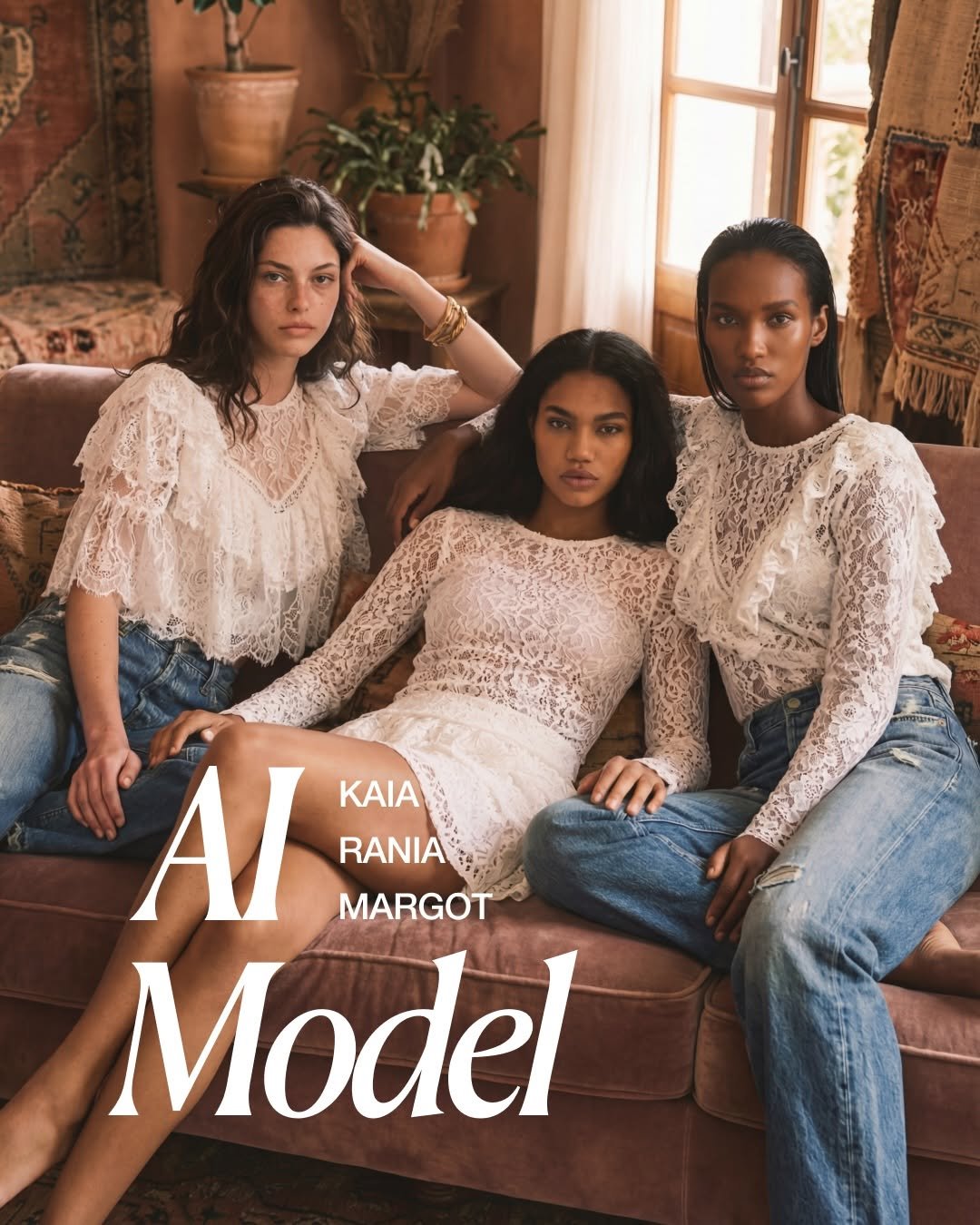
Botika AI models — Kaia, Rania, Margot — named AI model personas

Botika's named AI models: Kaia, Rania, Margot
10

Platform Breakdown

11

In the Market

Nil+Mon × Botika — Scale Your Brand With AI campaign
2024 Editorial Campaign DTC Fashion
Nil+Mon — Scale Your Brand With AI

Nil+Mon adopted Botika's editorial product to generate lookbook-quality imagery that matched their premium brand aesthetic. The collaboration produced one of the most-referenced Botika case studies: a 4x conversion lift on AI-generated product images compared to traditional photography. The campaign demonstrates Botika's reach beyond basic catalog work — into editorial, styling, and brand atmosphere photography that could previously only be achieved in a studio.

Result: 4x increase in conversion rate on Botika-generated product images vs. traditional photography. The case study appears prominently on the Botika website and has become the brand's primary performance proof point for editorial-market positioning.
Botika — Meet the face of your brand campaign
2024 Enterprise Partnership Heritage American Denim
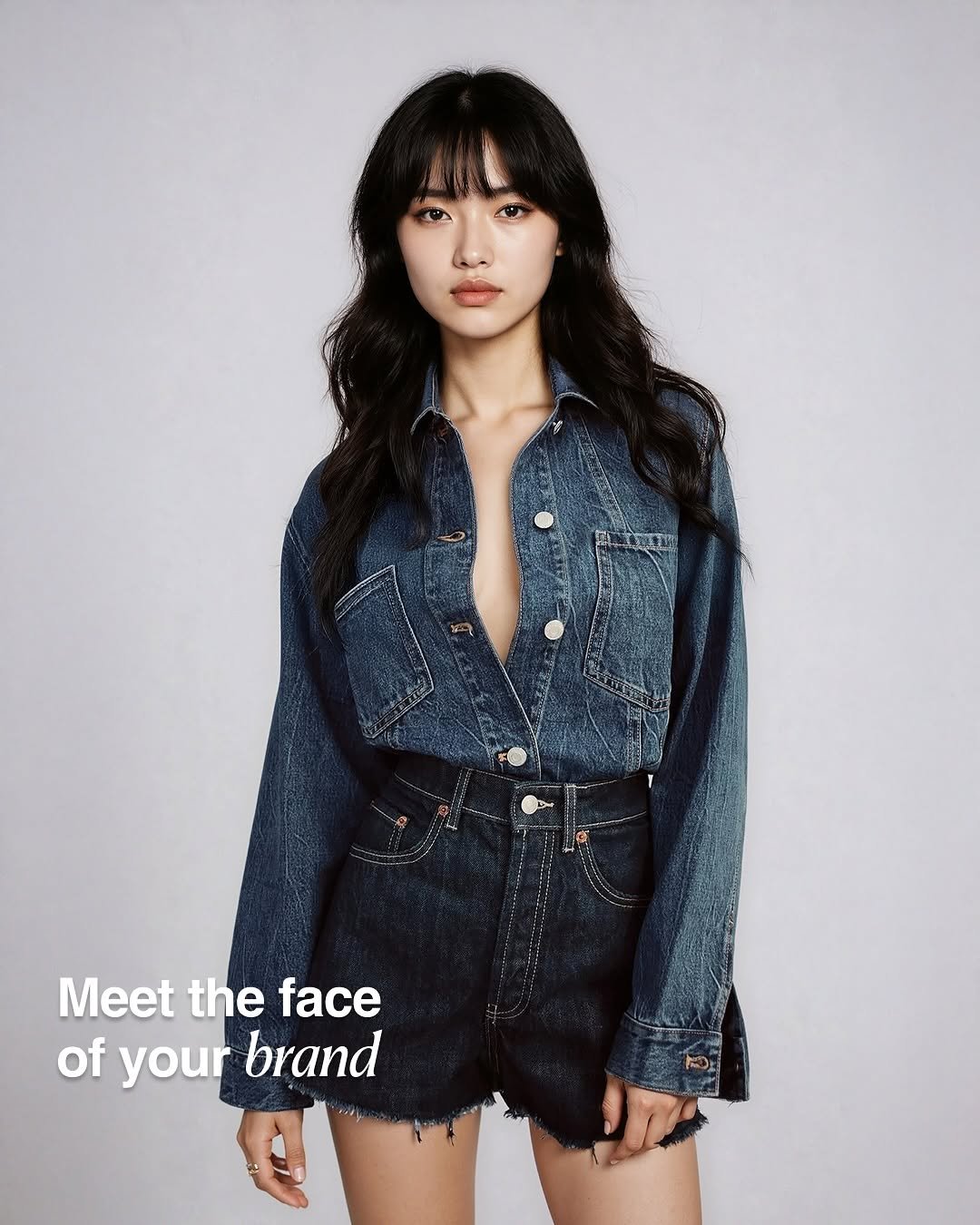
Jordache — Enterprise Scale Production

Jordache — a 50-year-old American denim brand with significant catalog volume — adopted Botika to scale product photography without increasing studio overhead. The partnership represents Botika's most public enterprise credentialing: Shaul Cohen, EVP of Jordache, publicly endorsed the technology. "Botika's AI technology is transforming how we think about visual content creation," Cohen stated, providing the kind of named executive testimonial that enterprise sales teams use to open conversations at similar-scale brands. The Jordache case demonstrates that Botika's output quality meets the standard of a legacy fashion brand's visual requirements.

Enterprise signal: Jordache's adoption — a heritage brand with conventional photography standards — validates Botika's output quality beyond the DTC segment. This reference customer opens doors to other mid-market and enterprise accounts that might otherwise view AI-generated imagery as a DTC novelty.

2024–2025 Brand Program Content Acquisition
Creator Partner Program

The Creator Partner Program represents Botika's bet on content-driven acquisition and community building. By bringing fashion creators, stylists, and brand photographers into the platform as partners, Botika generates authentic content, builds social proof, and expands its reference library for model and style diversity. The program is nascent but strategically sound — it mirrors the playbook used by successful B2B SaaS platforms to build user communities that generate both brand content and customer referrals.

12

Who They Serve

Primary Buyer

Fashion e-commerce teams at brands from $1M to $500M+ revenue. Typically the head of e-commerce, digital merchandising director, or marketing lead. They manage content production budgets and are directly measured on conversion rate and catalog velocity. They understand the economics of model photography and feel the cost acutely.

Secondary Buyer

DTC fashion founders and solopreneurs building Shopify stores. They use the Shopify App Store for discovery and adoption. They need the product to work immediately without setup complexity — the segment most affected by the current onboarding friction and the 2.5★ app store rating.

Retention Driver

Once a brand's visual system is built in Botika — branded AI models, consistent background styles, preferred styling presets — switching cost becomes very high. The product becomes embedded in the production workflow. Retention is not just about satisfaction; it's about platform lock-in. This is the long-term moat.

Shopify App Store Sentiment Analysis

2.5★
Love Pattern
Power users who figure out the workflow report strong satisfaction with output quality and time savings. "The results are genuinely impressive once you understand how to use it" is the recurring theme among high-rated reviews. Speed and quality are the top-mentioned positives.
Rage Pattern
Onboarding confusion is the dominant one-star theme. Users who don't receive adequate guidance in the first session tend to get frustrated before seeing a quality output. "Didn't work as expected" and "couldn't figure out how to get started" appear frequently in negative reviews — both solvable with better first-use design.
Implication for Brand
The product is not bad — it's underexplained. The brand promise ("40x faster, professional results") creates an expectation of immediate success. When users hit a friction wall, the gap between promise and reality creates negative reviews that persist publicly and damage consideration for new users.
Recommended Response
Interactive onboarding flow with a guaranteed first successful output. Active review monitoring and response. Possibly a dedicated onboarding success track for Shopify SMBs vs. enterprise accounts. This is as much a brand-protection issue as a product one — the reviews are visible to every prospective buyer.
13

Market Position

Brand Positioning Primary Market Key Differentiation vs. Botika
Botika Enterprise-grade AI model photography. Deep Shopify + direct integration. Proven at Forever 21 and Perry Ellis scale. Growing creator program and editorial product. SMB → Enterprise Category leader by client quality. The challenge: brand recognition has not yet caught up to product quality. Operating without a claimed category position.
ZMO.ai Broader AI fashion suite — models, backgrounds, styling, virtual try-on, and more. Wider feature coverage than Botika with a more generalist positioning. Targeting the full AI fashion stack. SMB → Mid-market Breadth over depth. ZMO's wider feature set appeals to brands that want one tool for many use cases. Botika's narrower focus on model photography creates higher-quality output in that specific workflow. Different value proposition for different buyer profiles.
Pixelcut Background removal, basic AI image editing, product photography cleanup. Self-serve, consumer and SMB focused. Strong App Store presence and broad category awareness. Consumer → SMB Not a direct competitor at the model generation layer. Pixelcut solves adjacent problems (clean backgrounds, basic editing) but doesn't produce on-model imagery. Botika customers often use both, as complementary tools.
Styleit Virtual try-on for end consumers — enables shoppers to see themselves wearing items before purchase. Targets the demand-side of the fashion content equation, not the supply-side. Consumer Different use case entirely. Styleit helps consumers evaluate products; Botika helps brands create product imagery. Minimal direct competitive overlap — the buyer personas, use cases, and ROI models are completely different.
Cala AI-powered fashion supply chain and design — from concept to production. Covers design ideation, supplier sourcing, and manufacturing. Targets brands that want to build new products, not photograph existing ones. SMB → Enterprise Different category. Cala is an upstream supply chain tool; Botika is a downstream content tool. A brand could use both — Cala to design and source, Botika to photograph and market. More complementary than competitive in practice.

Strategic Call

Botika has no direct competitor that combines enterprise-scale client validation, model photography depth, and Shopify distribution. The competitive risk is not an existing player but a well-funded entrant that moves faster on brand identity while Botika is focused on product. The window to claim the category name is open now — and the $8M seed round provides the resources to close it.