
TL;DR
Mobiko has built the most complete product in German corporate mobility — three pillars in one app, deep tax expertise, ISO 27001, and an 80% employee adoption rate that most B2B platforms would die for. The product story is strong. Giving it a voice is the work.
Founded as a spin-off from Audi Business Innovation and Mantro in 2017, Mobiko has built a proprietary tax-optimization algorithm, a three-product platform (Deutschlandticket, Mobility Budget, Home EV Charging), and now a B2B MaaS division — all with a team of ~24. What's distinctive is how far the product has outpaced the brand expression: their positioning is clear, their results are measurable, and their advisory model is genuinely differentiated — none of which is visible at first glance. Growth financing in April 2024 signals a Series A or strategic event on the horizon. A brand build ahead of that creates real leverage, and the “advisory at eye level” platform gives CE a rich creative brief to work from.
Employees
~24
Funding
$3.57M
Receipts / yr
260K+
Volume / yr
€13.5M
§01
Investors: Baloise Holding, Startup Family Office, Audi Business Innovation, Mantro GmbH. Notable customers include Volksbank Raiffeisenbank Dachau eG, Digital Charging Solutions, Arthur D. Little, Star Finanz, Inspired Consulting.

§02
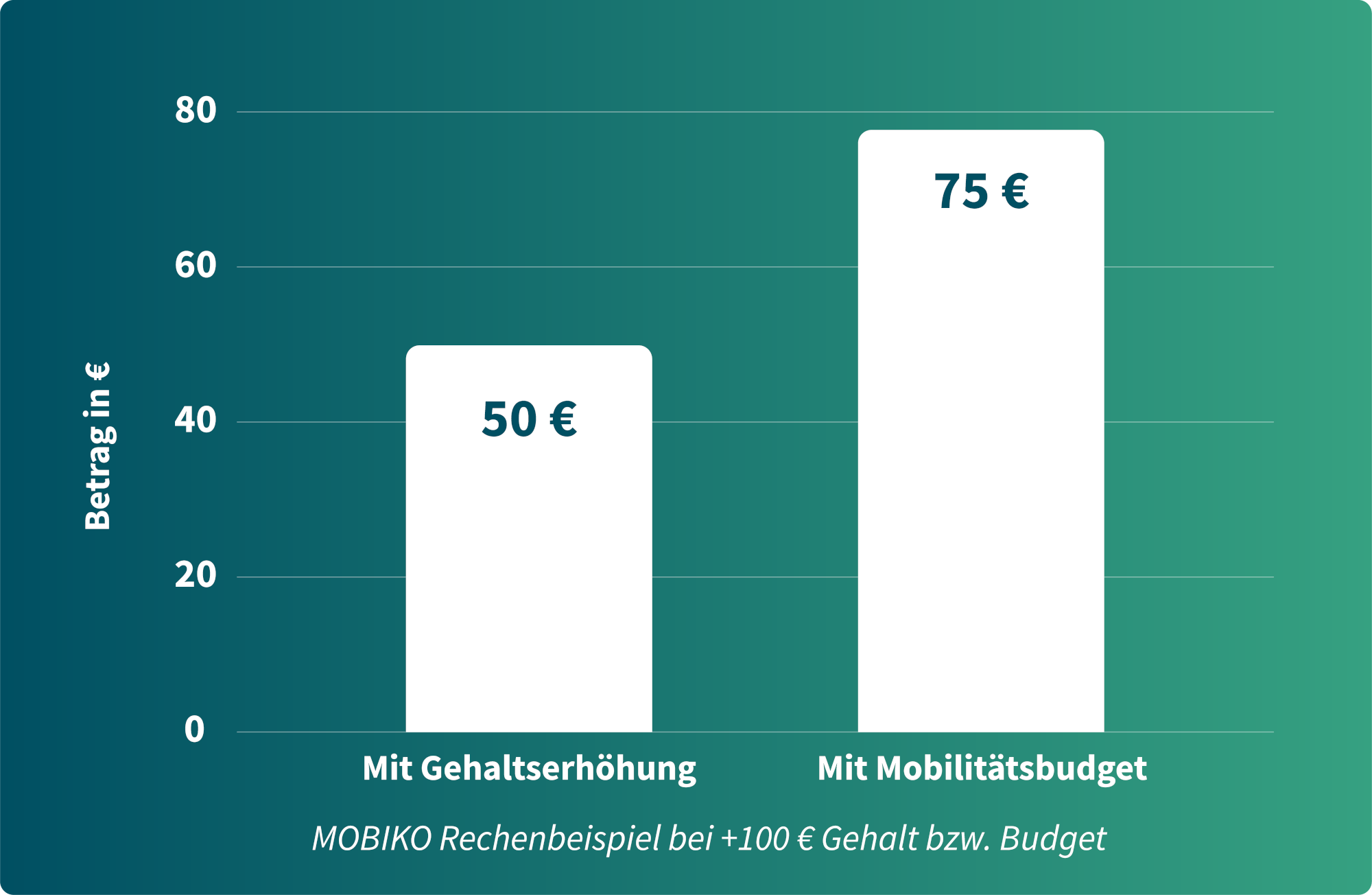
Mobiko positions as “Der Anbieter für Mitarbeitermobilität” — the all-in-one provider for employee mobility. Their core value proposition: Deutschlandticket + Mobility Budget + Home EV Charging reimbursement in a single platform, with a proprietary tax-optimization algorithm that saves employers up to 55% in payroll ancillary costs vs. salary raises.
"Not just a tool provider, but advisory at eye level" (Beratung auf Augenhöhe) — Mobiko's stated differentiator. Founders with Konzern background position themselves as strategic consultants, not just SaaS vendors.
Core differentiators: (1) Tax algorithm auto-assigns tax-free categories for each expense type — a genuine technical moat in the German market. (2) Receipt-based reimbursement gives employees total freedom of transport choice — not locked to one provider card. (3) Three-pillar product (Budget + Jobticket + Heimladen) is unique in DACH. (4) New “MOBIKO MaaS Solutions” B2B unit serves transit associations and micromobility integration (2024).
Tagline / headline: “Mit dem MOBIKO Deutschlandticket, Mobilitätsbudget und der Abrechnung von Heimladekosten machen Sie Ihre Mitarbeitenden mobil.”
§03
No major rebrand detected. Visual identity has remained consistent since ~2022. The brand currently operates with a teal-forward palette and functional web presence built on WordPress/Elementor. Growth has been product-led, not brand-led.
§04
Mobiko's palette centers on a deep teal (#004F62) as primary brand authority, paired with two greens communicating growth and sustainability, and a coral orange for primary action CTAs. Confirmed via Brandfetch (“Eden” / “Astronaut Blue”) and CSS extraction.
Color logic: Green = available budget / positive state / sustainable choice. Teal = brand authority, enterprise trust, DACH corporate register. Coral/orange = primary action (FAB button in app). The semantic system is clear in-product — green amounts, coral additions, dark for text — but the website applies it less rigorously.
The alternating dark-teal / white / light-grey section rhythm on the website is a defining visual signature. It creates structure without requiring a full design system — functional, if not distinctive.
§05
Source Sans Pro is Mobiko's confirmed primary typeface (Brandfetch). Humanist sans-serif, Bold 700 for headings. The design rationale is sound — it handles long German compound words gracefully — but it's a commodity choice with no brand distinctiveness.
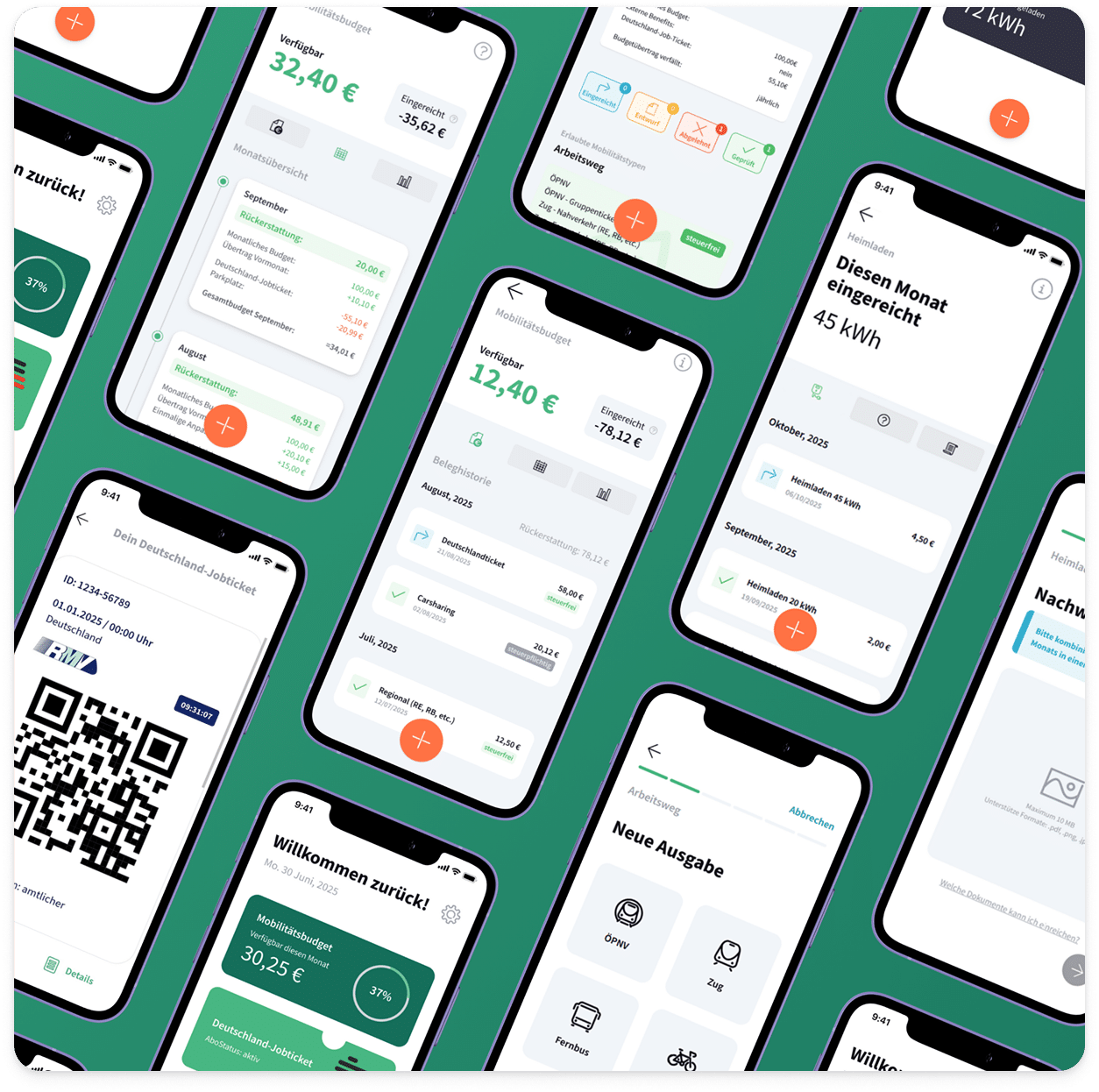
Design principle: Numbers are king. The most prominent typographic element in the mobile app is always the monetary value — reinforcing the product's core value proposition (budget visibility). The orange FAB + large euro amount in circular progress ring is the UI's hero moment. Smart product design; underexpressed on marketing surfaces.
§06
Website: Alternating dark-teal / white / light-grey section rhythm. Asymmetric two-column hero (55/45) — text left, device mockup right. Card-based resource and blog sections. Strong trust architecture: TÜV ISO badges, testimonial carousels, customer logos. German B2B sensibility: methodical, comprehensive, no visual noise.
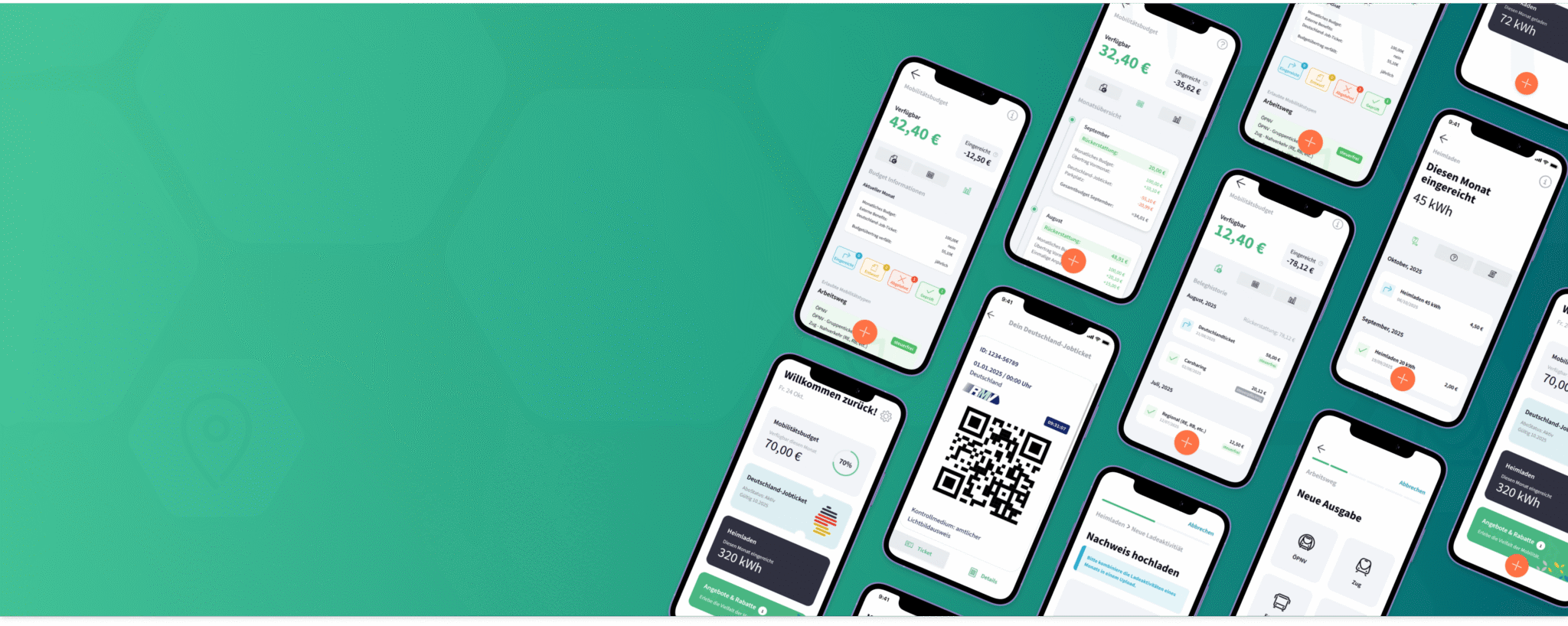
Mobile App (Employee): Hub-and-spoke architecture — home screen leads to three product cards (Budget, Jobticket, Heimladen). Orange FAB for expense submission always visible. Circular progress ring for budget visualization. Four-state expense workflow: Entwurf → Eingereicht → Geprüft → Abgelehnt. Digital wallet-style Deutschlandticket QR screen.
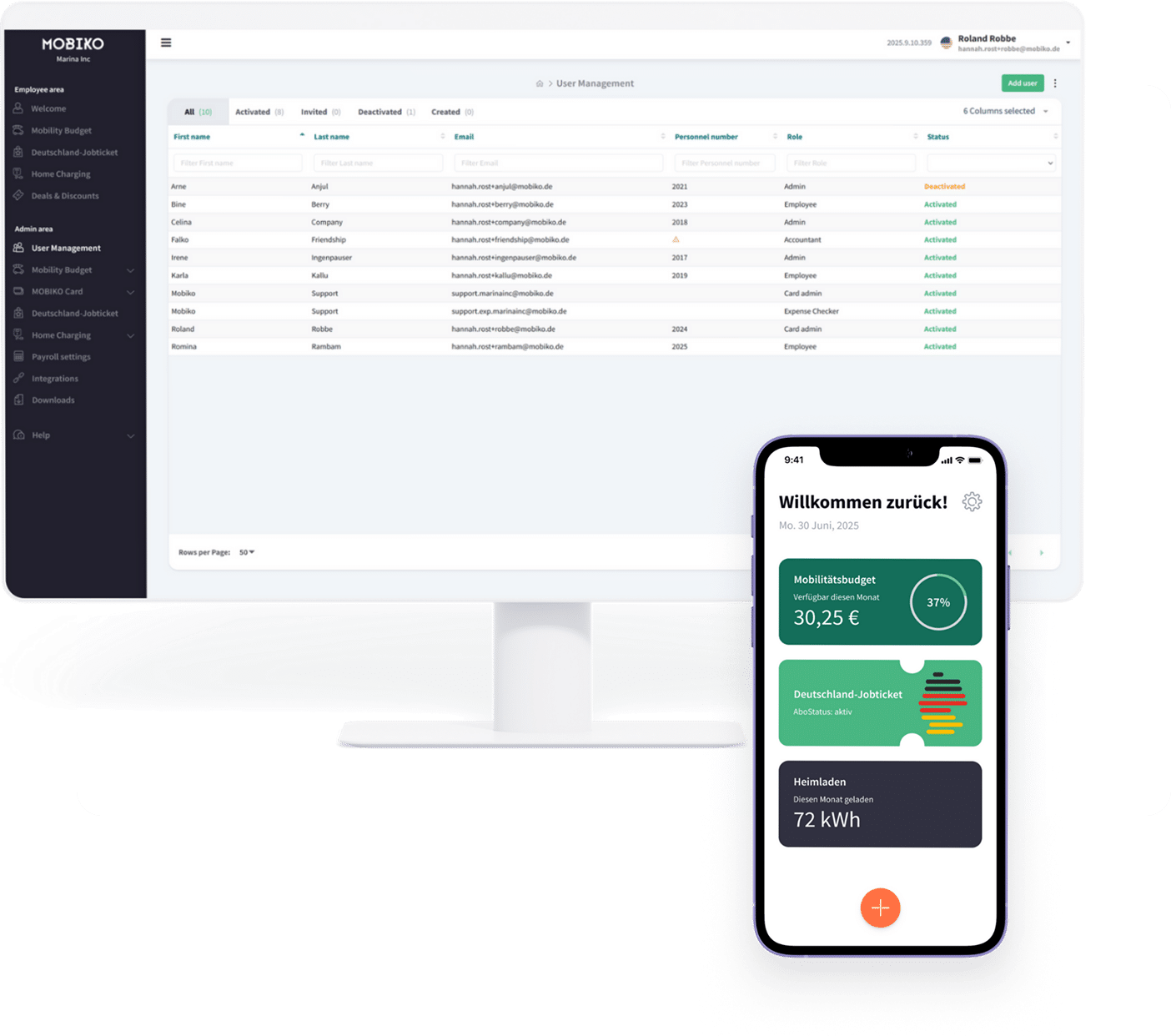
Web Dashboard (HR Admin): Left sidebar with nested items. Enterprise-grade user management (Admin, Employee, Accountant, Card Admin, Expense Checker roles). Data tables with column-level filters, breadcrumb navigation, tab-based segmentation.
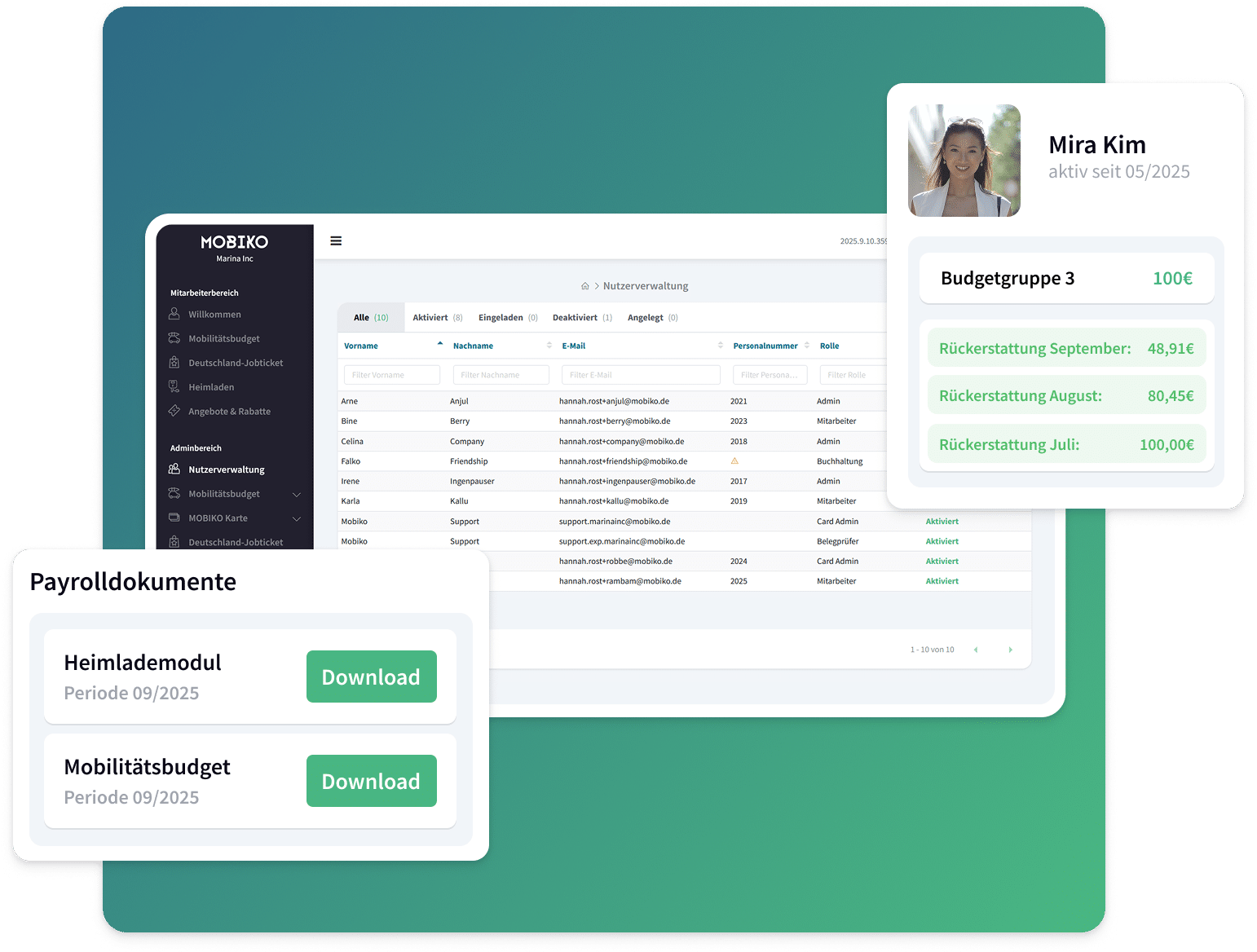


Design maturity: Mid-to-high. Consistent design system across platforms, semantic color usage, platform-appropriate patterns. Room to grow on mobile navigation discoverability and desktop visual differentiation. The product UX is significantly ahead of the marketing expression.
§07
| Dimension | Rating | Notes |
|---|---|---|
| Product completeness | Strong | Unique three-pillar offering in DACH. No direct competitor combines Budget + Jobticket + Heimladen in one app. |
| Tax expertise / moat | Strong | Proprietary algorithm. Deep German payroll law knowledge. Hard to replicate fast. |
| Employee adoption | Strong | 80% avg adoption — exceptional for a B2B benefit tool. 100% recommend (n=769 survey). |
| Trust credentials | Strong | ISO 27001 (TÜV). Essential for German enterprise procurement. |
| Brand expression | Early stage | Brand has grown organically alongside the product. WordPress/Elementor site is functional; no external creative partner yet. The product story is ahead of the brand story. |
| Social media presence | LinkedIn-only | Educational LinkedIn content works for existing customers. Limited reach beyond core HR audience. No visual content system yet. |
| Team scale vs. competition | Weak | ~24 employees limits scale speed. Navit has more VC funding, Workmotion is much larger. |
| Reimbursement UX friction | Moderate risk | Employee submits receipts post-payment. Navit/Rydes use pre-loaded cards — zero friction for employees. |
| Thought leadership | Growing | Mobilitätsreport 2025 is an underutilized asset. Content strategy exists but not differentiated enough. |
| International ambition | Limited | Purely DACH-focused. German tax specificity is both moat and ceiling for international expansion. |
§08
Mobiko has built the most complete product in German corporate mobility, and the product quality is genuinely high. What hasn't kept pace is the brand expression — not because the thinking isn't there, but because the focus has (correctly) been on building the platform. That's the moment CE steps in. Navit is gaining momentum with a cleaner identity. Rydes has a clear sustainability angle. MOBIKO has the stronger product — and the brand work is how that becomes visible.
“Advisory at eye level” is a strong creative platform. The Mobilitätsreport is an underused thought leadership asset with real data behind it. The tax algorithm — which directly saves employers money — is a remarkable product truth that's never been told as a brand story. These aren't problems to fix; they're opportunities to activate.
April 2024 growth financing signals a Series A or strategic acquisition in 2025–2026. A clear brand system built ahead of that event creates leverage — for investors, for enterprise procurement, and for competitive positioning. CE opportunity: brand strategy + identity system + web — sequenced in a way that moves fast and builds something durable.
Signal Indicators
Threat to CE Clients
Low
B2B Germany only, niche vertical
Acquisition Signal
Medium-High
Growth financing Apr 2024
Brand Gap Score
8/10
Product quality vs. brand quality
§09
Sage + Caregiver. Expert advisor who genuinely cares about making employees mobile and employers efficient. Less disruption — more steady expertise. Not a startup screaming for attention.
Calm confidence. A TÜV engineer who also happens to be a sustainability advocate and genuinely enjoys simplifying complex tax situations for HR managers. Moderate pace, thorough, evidence-first.



§10
German corporate mobility is a small but growing market. MOBIKO, Navit, and Rydes are the three specialist players. Workmotion is adjacent (global HR platform with mobility). The competitive dynamics favor MOBIKO on product completeness but disadvantage it on brand and UX immediacy.
| Dimension | MOBIKO | Navit | Rydes | Workmotion |
|---|---|---|---|---|
| Payment model | Reimbursement (submit receipts) | Virtual Navit card (direct pay) | In-app prepaid budget | Global HR platform |
| Tax optimization | Proprietary algorithm, deep German law | Auto-tracking, CSRD-ready | Automated system integration | Not core |
| Product scope | Budget + Jobticket + Heimladen | All modes, card-based | Budget + public transport + carbon | HR / payroll / mobility |
| Team size | ~24 | Larger (VC-backed) | ~20 (€3.5M raised 2023) | Large |
| Brand quality | Functional, underinvested | Cleaner, more modern | Sharp sustainability angle | Enterprise tier |
| Key advantage | Advisory depth + 3 products + tax moat | Card UX + integrations | Carbon focus + pre-pay UX | Global scope |
| Key weakness | Receipt UX friction, brand investment | Higher cost, card dependency | Small team, limited DACH depth | Mobility is peripheral |
Competitive read: MOBIKO has the most complete German-market product and the strongest underlying differentiation — tax algorithm, advisory model, three-pillar platform. Navit has moved faster on visual identity. Rydes has a clearer sustainability story. The competitive gap isn't product — it's expression. That's a solvable problem.
§12
Flagship Content Asset
260,000+ analyzed receipts, €13.5M total volume. Tracks how mobility budgets are spent in practice: Jobticket adoption rates, EV home charging behavior, sustainable transport splits. Used as lead generation and thought leadership. Published annually. An under-leveraged asset — it's PR-worthy but rarely gets external placement.
Messaging style: Data-driven claims ("bis zu 55 % Lohnnebenkosten sparen"). Customer-first voice (named testimonials with company and role). Process clarity ("Everything runs centrally through MOBIKO — no new software, no new accounts"). Sustainability without greenwashing.
No external advertising or campaign creative identified. Brand operates primarily inbound/content marketing + direct sales. This is a €13.5M platform with zero brand advertising spend. The opportunity cost is significant.
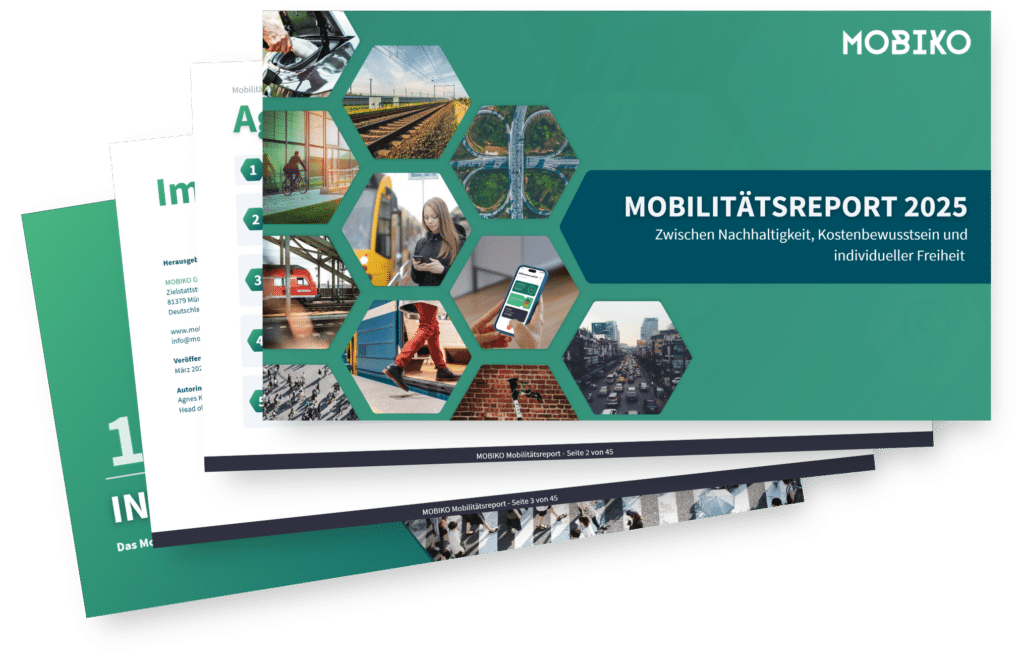
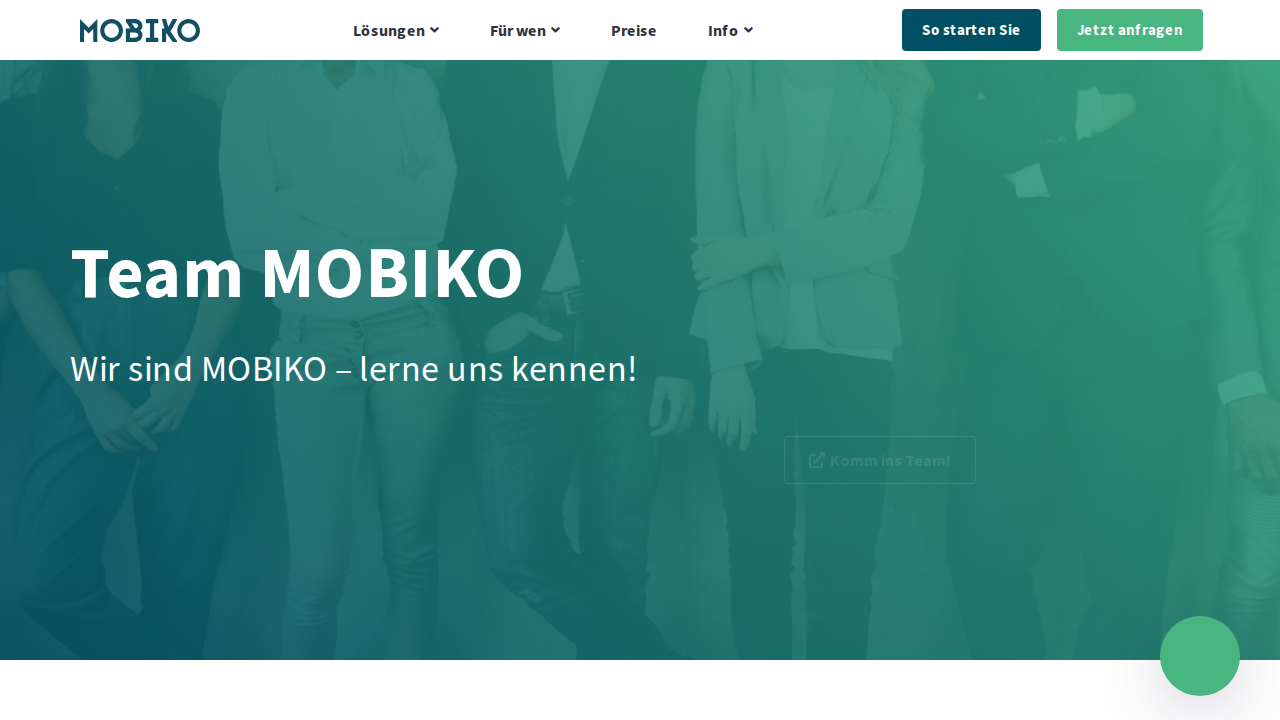
Visual language: App mockups as primary hero visual. Clean infographic charts (bar charts: savings vs. salary raise). Photography of real professionals, not stock imagery. Hexagonal shape motif in brand assets. The visual language is professional but not remarkable — interchangeable with any mid-market German SaaS brand.
§13
ICP — Employer Side
HR managers and HR leaders at German mid-to-large companies (200–5,000 employees). Fleet and mobility managers transitioning away from company car models. Finance and payroll teams seeking cost optimization. Sustainability officers seeking CO2-reduction levers in HR.
ICP — Employee Side
German knowledge workers commuting in urban/suburban environments. EV-driving employees needing home charging reimbursement. Frequent Deutsche Bahn users (Deutschlandticket holders). Eco-conscious employees who value sustainable mobility choices.
German B2B Buyer Psychology
Community Strength: Low
No visible community, no user forum, no ambassador program. Customer relationships appear primarily advisory/consultative (1:1 with CSM). Notable verticals: Banking (Volksbank), Consulting (Arthur D. Little, Inspired Consulting), FinTech (Star Finanz, Digital Charging Solutions).
§14
Mobiko's product is strong. The positioning is clear. What's missing is the translation layer — a brand system that makes the product story visible, builds enterprise trust, and creates the category authority that a Series A or acquisition event will demand. Here's how CE would approach it.
The Cropster lesson: the work isn't a rebrand. It's an activation. The substance is already there. CE's job is to build the system that lets it show.
Week 1
We map what exists: visual assets, messaging, customer language, competitive positioning. Stakeholder interviews with founders and customer-facing team. We're looking for what Mobiko already knows about itself that hasn't been put into brand form yet.
Why first: You can't build a brand system without knowing what truth it's built on. Discovery is how we find the brief — not invent it.
Week 2–3
“Advisory at eye level” is already a strong platform — we sharpen it into a positioning statement, a messaging architecture (employer, employee, MaaS buyer), and a brand voice brief. The tax algorithm story, the Mobilitätsreport, the three-pillar product — each gets its place in the hierarchy. The brand brief is the document that makes every subsequent decision faster.
Why this order: Strategy before identity. A visual system without a clear brief produces beautiful things that say nothing.
Month 1–2
Logo evolution (the wordmark has potential — it needs precision, not replacement), typography system (Source Sans Pro works; it needs art direction), color system (the teal hierarchy is solid; the accent and semantic layers need definition), and a motion + iconography direction that works across app, web, and presentation. Delivered as a working brand guide, not a PDF nobody reads.
Why now: Identity is the infrastructure. Everything that follows — website, content, campaigns — runs faster when the system is clear.
Month 2–3
The WordPress/Elementor site has done its job. The new site needs to do what the product already does: communicate authority, reduce friction, and move HR decision-makers toward a conversation. Homepage, product pages, the Mobilitätsreport as a living content hub, and an SEO structure that captures the German HR mobility search category. Built on a system, not assembled from templates.
Launch anchor: the Mobilitätsreport 2026. A brand-new web presence + the category's most data-rich annual report = a launch event, not just a redesign.
Month 3+
A LinkedIn content engine built around the Mobilitätsreport data, German mobility law changes, and Mobiko's category expertise — formatted so the brand voice is consistent and the posting cadence is sustainable. Not campaigns. A system that runs. This is where “advisory at eye level” becomes visible to every HR manager in the DACH market.
The compounding effect: brand authority builds before the Series A conversation starts. Not scrambling to look the part — already being it.
A brand that reflects the product. Enterprise buyers see authority before the first call. The Mobilitätsreport becomes a category-defining annual event. The Series A or M&A conversation starts with a company that looks like what it is — the market leader in German corporate mobility.
Curious Endeavor · Mobiko Visual Research · March 2026
Confidential — Internal Use Only
§11
Social Strategy
Content Pillars
Tone & Format
Text and link-heavy LinkedIn posts. Educational in nature. No identified visual content system. No influencer or creator strategy. Posts reference regulatory changes (§ 3 Nr. 15 EStG) as primary engagement driver in German HR community.
Weaknesses
No visual content system. Low brand distinctiveness in feed. Content performs for existing customers (educational utility) but unlikely to drive brand awareness or top-of-funnel reach. Germany/DACH only — no international channel strategy.